
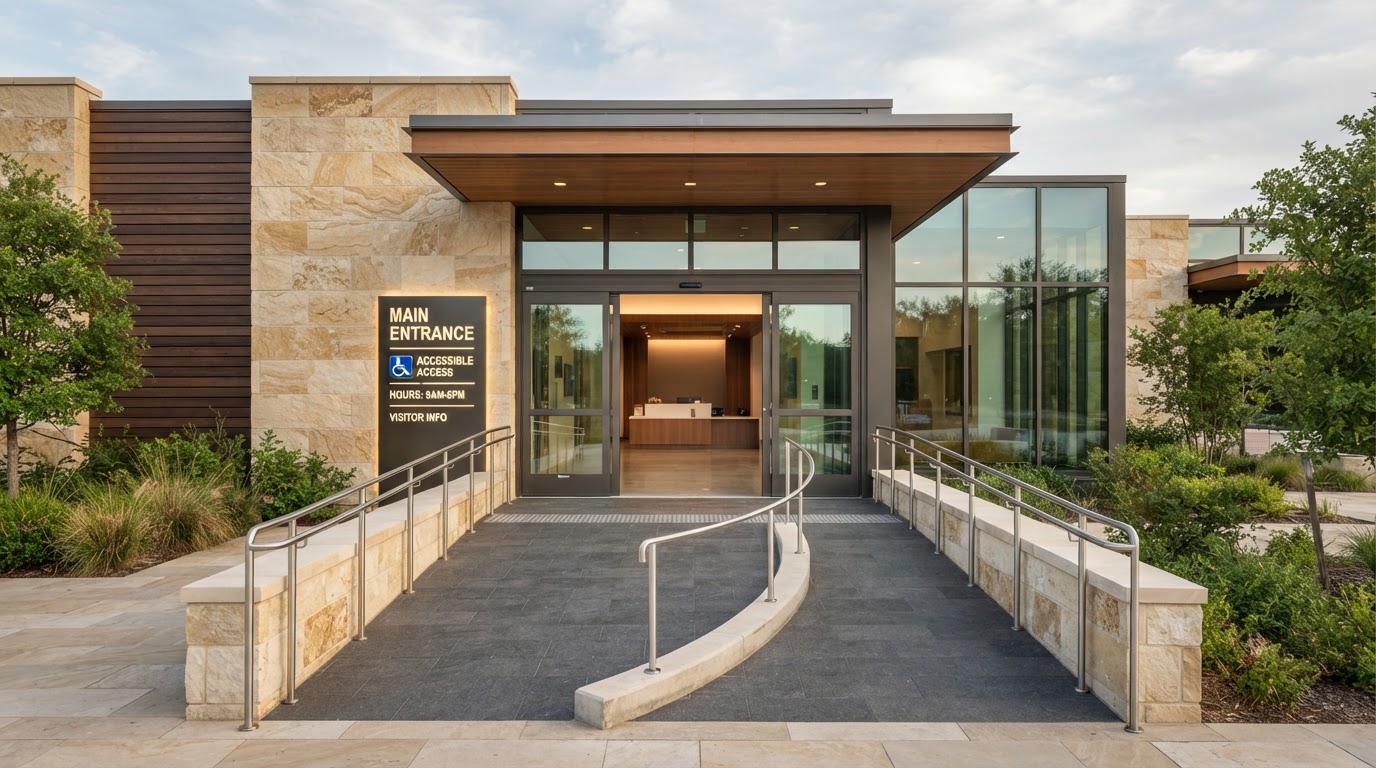
I was born with cerebral palsy, and accessibility has always been personal to me. My understanding of access developed while working with my father in real estate — considering ramps, entrances, properties, and everyday usability long before it was a profession.
I learned early that access is not simply about getting inside a building. It is about being able to participate independently in everyday life.
Seemingly Small Barriers, Lasting Impact
A single step. A narrow doorway. An uneven path. A difficult entrance. Poorly considered navigation. These can determine whether someone participates or feels excluded — whether a visit is possible at all.
For nearly 30 years, I have navigated the gap between what satisfies a requirement and what actually works. That lived experience is the foundation of Beyond The Ramps — the result of decades of advocacy, professional work, and a commitment to culture change.
Access is not a privilege, favor, or special accommodation. It is what makes full participation possible.